Most Roofing Websites Do Not Have a Traffic Problem. They Have a Conversion Problem.
Most roofing sites are built like online brochures. The good ones are built like systems that help a homeowner go from concern to call without thinking twice. That is a different craft, and it is what actually fills the schedule.
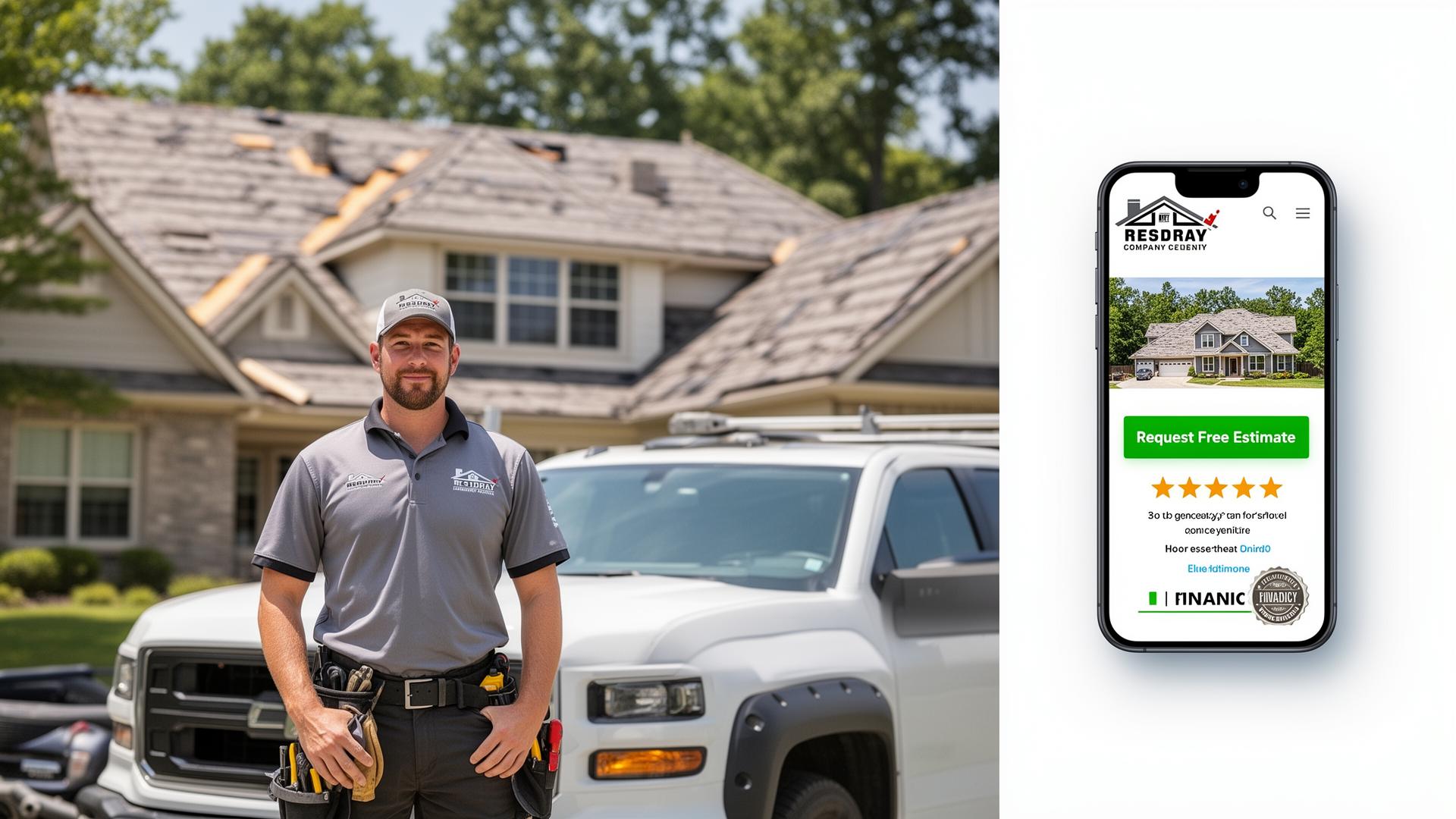
Not All Roofing Leads Are Equal
Two roofing companies can see the same monthly traffic and end up with completely different results. The difference usually has nothing to do with volume. It has to do with the kind of visitor each company is attracting and how the site speaks to that person.
A homeowner reading an article about shingle warranties is not the same as a homeowner with a tarp on the roof trying to find someone to call before dinner. Both show up as a number in your analytics. Only one of them is close to becoming a job.
Informational
A homeowner researching shingle types or roof lifespan. Useful for trust, slow to book.
Emergency and storm
An active leak after a storm. They will call the first company that looks credible on their phone.
Estimate and replacement
Already planning the project. Comparing two or three companies before requesting a quote.
Financing
Knows the roof needs work but is checking monthly payment options before committing.
Traffic is a vanity number. High intent lead opportunities are the only thing that actually shows up in the calendar. A website built around that distinction looks, reads, and behaves very differently from one built to simply exist online.
Most Roofing Websites Focus on Appearance Instead of Conversion
A roofing site can look perfectly acceptable and still bleed leads every day. We see this all the time. The colors are fine, the photos are professional, the layout is clean, and the phone still does not ring.
The problems are almost always operational. Small decisions about where things live on the page, how the homeowner gets from one step to the next, and what is visible at the moment they are ready to act.
CTA placement
The phone number sits in the footer instead of within thumb reach. The estimate button blends into the background.
Mobile flow
Type is small, the menu hides everything, and the call button needs two taps. Most homeowners give up after the first one.
Trust positioning
Real reviews, licensing, insurance, and project photos live three clicks deep instead of next to the request form.
Confusing navigation
Services, service areas, and financing are buried under generic labels. The homeowner cannot tell what you actually do.
Slow contact process
Long forms, captchas, and no visible phone number. Friction at the moment they were ready to act.
Generic messaging
Copy that could belong to any roofer in any state. Nothing tells the homeowner why this is the right local company.
Weak estimate request structure
No clear path from concern to scheduled visit. The form asks for everything except the one thing the homeowner needs to hear.
Good design matters, but it is the floor, not the ceiling. We treat a roofing website as a sales environment first and a visual project second. That is the gap between a site that looks nice and one that actually books jobs.

How Homeowners Actually Choose a Roofing Company
A new roof is not an impulse purchase. It usually starts with a concern. Water in the ceiling, a neighbor's roof getting replaced, an insurance letter, or a storm that left shingles in the yard. That concern turns into urgency, and urgency sends them to Google.
From there the homeowner is doing two things at once. Looking for someone who can actually fix the problem, and quietly checking whether they can trust this company in their home. They are reading reviews, scanning project photos, looking at license numbers, and noticing whether the site loads quickly on their phone.
By the time they fill out a form or tap the call button, the decision has mostly been made. A roofing website should support that journey at every step. Reassurance early, proof in the middle, and a frictionless way to take the next step at the end.
What High Converting Roofing Websites Usually Have
After looking at hundreds of roofing sites, the ones that consistently generate calls all share the same operational habits. None of these are exotic. They are just done carefully, in the right order, and tested against how a homeowner actually uses the site.
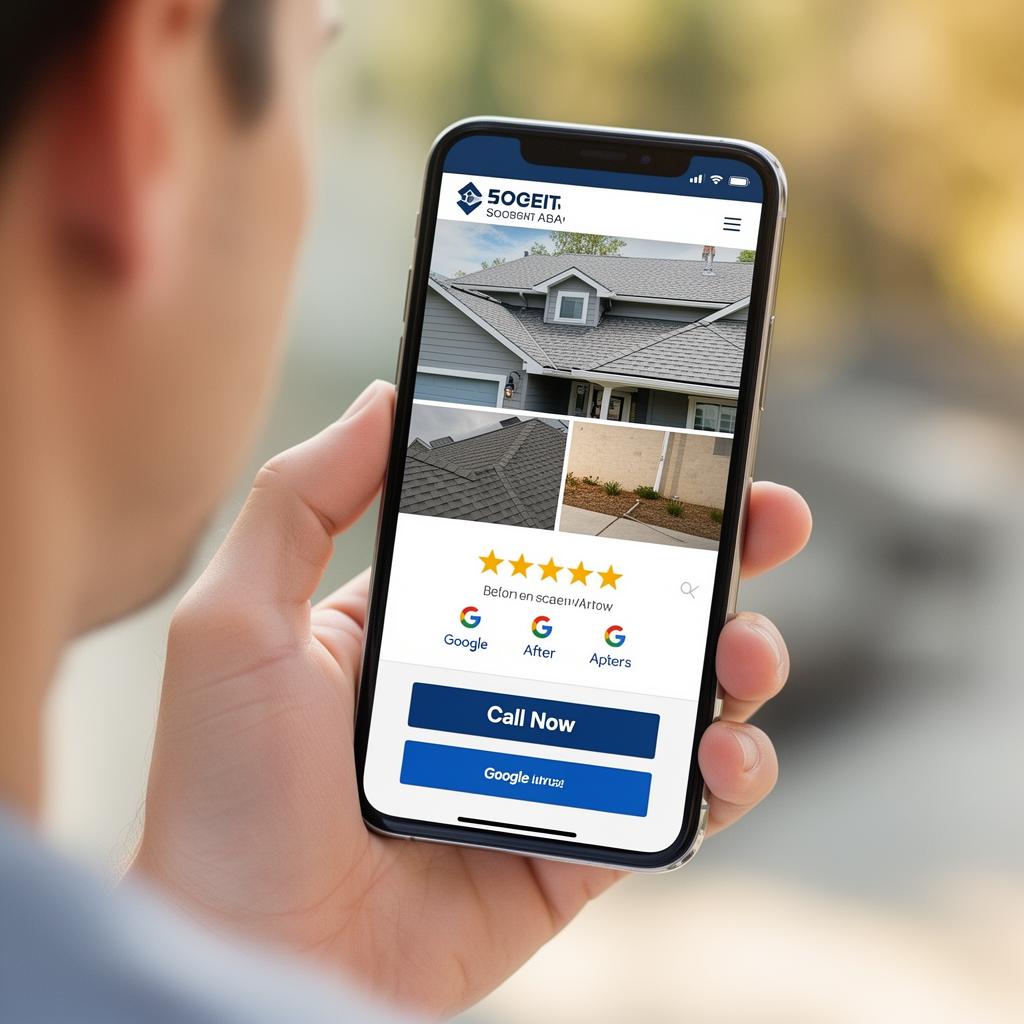
Mobile first structure
Built for the phone first. Tap targets, font size, and call buttons all work with one hand.
Visible financing
Monthly payment options surfaced near the estimate request. A common reason homeowners hesitate.
Trust near the CTA
Licensing, insurance, warranties, and review badges placed where the decision is actually made.
Fast estimate request
Short form. Clear expectation of what happens next. No captcha walls or ten step funnels.
Reviews integrated
Real Google reviews pulled into the page, not a logo and a number. The homeowner can read for themselves.
Local service clarity
Service areas spelled out by town. The homeowner sees their own neighborhood and feels covered.
Before and after visuals
Project photos from real local homes. Proof that the work has been done before, nearby.
Clear homeowner guidance
Plain language about how the process works. No jargon, no pressure, no surprise steps.
Why Many Roofing Companies Plateau Online
Plenty of roofing companies build a solid local reputation, run on referrals for years, and then stall. The phone still rings, just not as often, and the new calls that do come in feel less qualified than they used to. The pattern is usually a mix of the same few things.
Over reliance on referrals
Referrals are excellent business, but they are unpredictable and they cap your growth at the speed of word of mouth. When the referral pipeline slows, there is nothing else carrying the schedule.
Weak search visibility and outdated architecture
The site was built five or seven years ago. Page speed is slow, the local pages are thin or missing, and Google has quietly moved newer competitors above you in the map pack. Most owners do not notice until the call volume drops.
Traffic without lead quality
A previous marketing vendor pushed for rankings on generic keywords. Sessions went up. Calls did not. The site is now attracting browsers and curiosity searches instead of homeowners ready to schedule an estimate.
A beautiful website on its own does not solve any of this. The site has to be tied to how the business actually wins jobs. Otherwise it just looks better while producing the same results.
We build roofing websites the way a roofing company runs a good job. Quoted clearly, executed cleanly, and judged by the result.
Your Website Should Help Generate Better Roofing Leads. Not Just Look Better.
We will review your roofing website the way a homeowner would, then send a direct walkthrough of what is working, what is costing you calls, and what to change first. No sales pressure.
Request a Website Growth Audit
We'll review your website, visibility, and lead-generation opportunities and follow up with practical recommendations for improvement.
Related Resources
Roofing Marketing Ideas That Actually Generate Leads
Why most roofing marketing creates activity instead of booked jobs, and what to do instead.
Read moreRoofing Services Online Reputation Management
Why your online reputation influences buying decisions long before a homeowner ever picks up the phone.
Read moreMaryland Roofing Website Design
How modern roofing sites are built to turn local traffic into booked estimates in Maryland.
Read moreWhy Maryland Roofing Websites Fail to Generate Calls
A deeper look at why most roofing sites get traffic but no calls, and what to change first.
Read more